The crab
counts are holding up
for recreational boaters
despite the commercial
pressure since the
December 15th commercial
opener, but the end of
rockfish season on
December 31st results in
party boats running the
occasional crab-only or
crab/sand dab
combination trip.
The Reel Magic canceled
out on a crab trip
Saturday 1-11 due to
high seas and wind. We
hope to get out this
coming week.
Captain
Rick Powers of Bodega
Bay Sport Fishing
finished up the rockfish
season with a flourish
with 23 limits of
bottom-dwelling rockfish
and 23 crab. He said,
“We have been batting
1000 percent on the
rockfish/crab
combination trips with
limits on every trip
since the crab opener.
That’s phenomenal. The
swell backed off, and
there were more lings on
the boat as well. This
was the best crab season
that I have ever seen,
and we had a great
salmon and rockfish
season. Crab-only trips
along with whale
watching will fill the
winter months until the
salmon and rockfish
seasons are expected to
open in April.”
Powers
was out on January
3rd with 13 anglers
on a crab-only on the
New Sea Angler,
and they were back at
the docks within an
couple of hours with
limits of crab to 3
pounds as the pots
remain loaded. He will
be running crab-only
trips depending upon
weather conditions and
interest.
Captain
Merlin Kolb Reel
Magic, also finished
the rockfish season on a
high note, but the ling
cod were missing in
action for the most part
over the last month. The
Reel Magic will
be running crab-only or
crab/sand dab trips in
the coming months.
The owner
of Lawson’s Landing at
Dillon Beach is a
commercial crabber, and
he will be providing the
fresh crab for the
Golden State Salmon
Association’s Crab Feed
on Saturday, January
18th at the
International
Sportsmen’s Exposition
at Cal Expo. Tickets are
$85/person or $800/table
available at www:goldenstatesalmon.org.
Note
to Readers:
After 24 years we
are scaling back on
updating these reports
with an eye towards
travel. I have a summer
full of travel plans and
can't wait for the
adventure to begin. I'm
going to Germany and
Switzerland next June
for a brothers wedding,
three trips to our
family vacation home in
Alaska and then back to
Europe for a cruise that
my wife Linda wishes to
do. It's impossible to
travel and update this
site so its time to end
reports here. Life is
short and at 58 its time
to see more of this
world. Reports
will continue here
through May and readers
can sign up for the
Northern California
Hotsheet
published twice weekly
by Dave Hurley.
The good news is my
business partner Merlin
Kolb does an excellent
job on daily fishing
updates on our Real
Magic Sportfishing
Facebook page. Like
us there for daily
reports. With the
ability to report
directly from the water
most local captains is
going to FB.
If you are looking for a
very affordable Alaska
vacation we have one
week open in June and
one in August.
See you on the water!
Mike
Alaska
Vacation
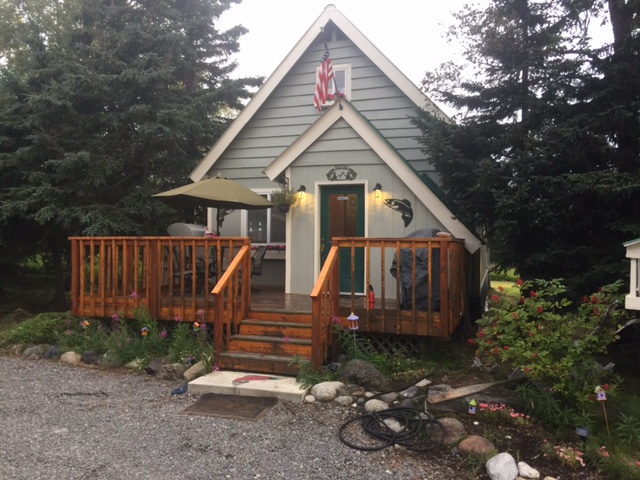 For readers looking for an Alaska adventure we still have
dates open in June and August at
our
Kenai peninsula
vacation
cabin
in 2019
For readers looking for an Alaska adventure we still have
dates open in June and August at
our
Kenai peninsula
vacation
cabin
in 2019
Our
fully equipped, coastal home sits on three wilderness acres on the "middle Kenai
peninsula". Being centrally located we are within 30 minutes of five
rivers including the Kenai, Kasilof and Anchor and just 20 minutes north of the
saltwater tractor launches in Ninilchik and Deep Creek.
Most of our guests do a combination of fishing on
their own and a day or three of guided river, fly-out or saltwater trips
between self guided trips. With our centrally base location your options are unlimited.
For all our guest's we
include a three hour
tutorial (at our
Sebastopol home)
covering tackle,
tactics, best locations.
We can also hook you up
with some of the best
guide, charter and
fly-out contacts in the
area.
The three bedroom/ 2
bath cabin comfortably
sleeps 6 and weekly
rates are just $1675 per week (Sunday to Sunday). Additional info and pictures can be found
here.
If you have any questions please give us a call at 707 479-0992
The
crabbing and rockfish
action remain
outstanding. We canceled
our trips this Sunday
but the Reel Magic was
out on Saturday
12-14. Captain Brian
reported 6 limits of
rockfish and 8 easy
limits of quality crabs.
Rick on the New Sea
Angler also had limits
of crabs and rockfish
plus two lings for all
on board. The Reel Magic
has spots open through
December.
With the commercial
fleet now setting gear
and counts will drop
quickly by the end of
the month. There is just
a huge amount of gear
that has been brought in
and many out of area
boats will be hammering
the local waters.
 Owner
/ operator captain
Merlin Kolb is bringing
the 34 foot twin diesel
catamaran the "Reel
Magic" to Bodega bay
this month. He will be
offering salmon /
rockfish and crabbing
trips through the spring
and summer months.
Merlin is a well known
local captain who is
excited to finally be
running his own
operation. 707 875-BOAT
(2628)
or
707
479-0992.
Owner
/ operator captain
Merlin Kolb is bringing
the 34 foot twin diesel
catamaran the "Reel
Magic" to Bodega bay
this month. He will be
offering salmon /
rockfish and crabbing
trips through the spring
and summer months.
Merlin is a well known
local captain who is
excited to finally be
running his own
operation. 707 875-BOAT
(2628)
or
707
479-0992.
New
Sea
Angler
Sportfishing.
Captain
Rick
is
offering
rockfish
and
salmon
trips
daily 707
875-3344